printbooth.in · Editorial
Open-plan offices weren't built for call-heavy work.
Most modern offices ran a hot-desking experiment and accidentally created an acoustic one. This is the field guide we wish we'd had when we started looking at office booths.
Pick your entry point
Where are you in the booth conversation?
Four ways into the site, depending on what you came here to figure out.
01 · New to booths
What is an office booth, actually?
A category overview — formats, sizes, where booths fit on a real floor plan.
02 · Already specifying
The buying guide
What to look at, what to ignore. dB, STC, ventilation, door seals.
03 · The acoustics
Soundproof, decoded
dB attenuation, STC, ventilation trade-offs — how to read a spec sheet honestly.
04 · HR & facilities
Noise complaints on the floor
The HR side of the conversation — triage, root causes, when an acoustic cabin helps.
Featured · Buying guide
Acoustic booth buying guide for modern offices
What to look at, what to ignore in the marketing, and how to translate a spec sheet into what your floor will actually sound like.
Silo 01 · Category
Office booths, defined
Types, sizes, floor-plan placement, vendor questions.
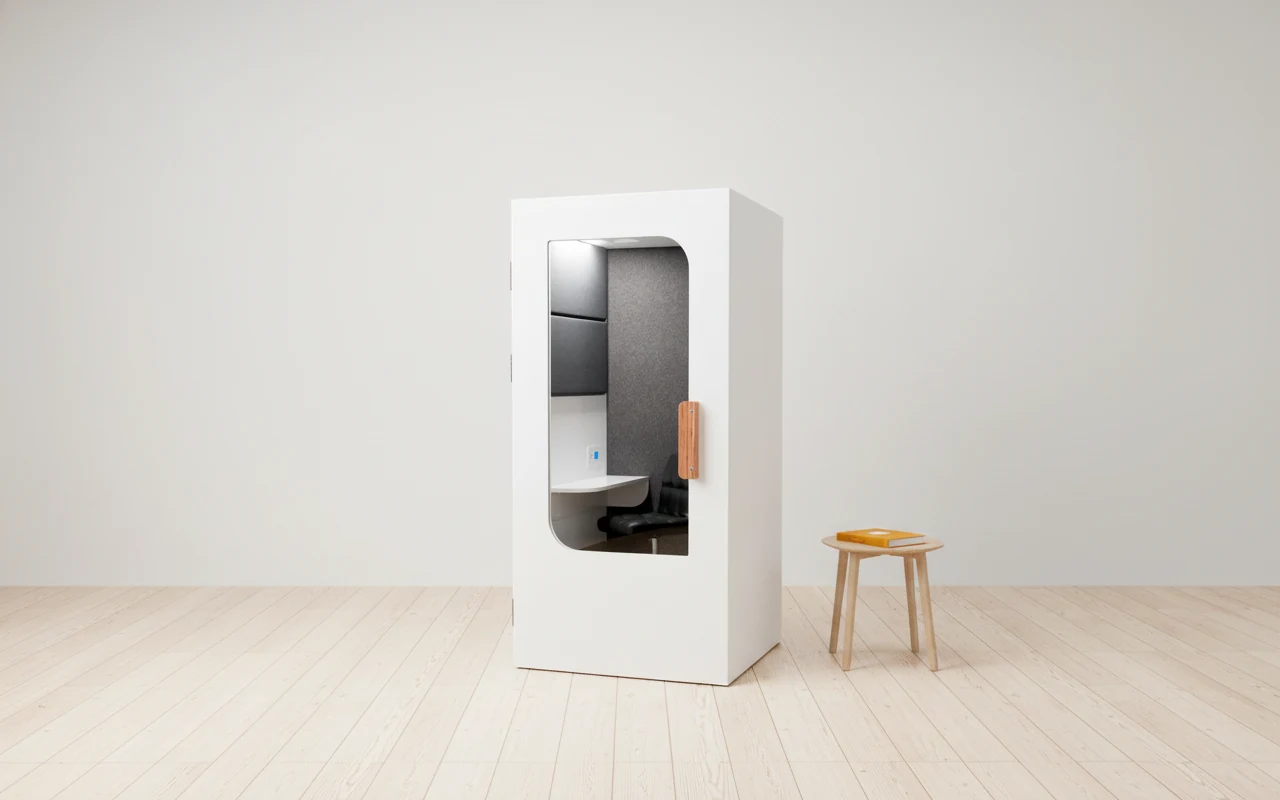
Silo 02 · Engineering
Soundproof office booths
dB attenuation, STC, ventilation, reading specs honestly.
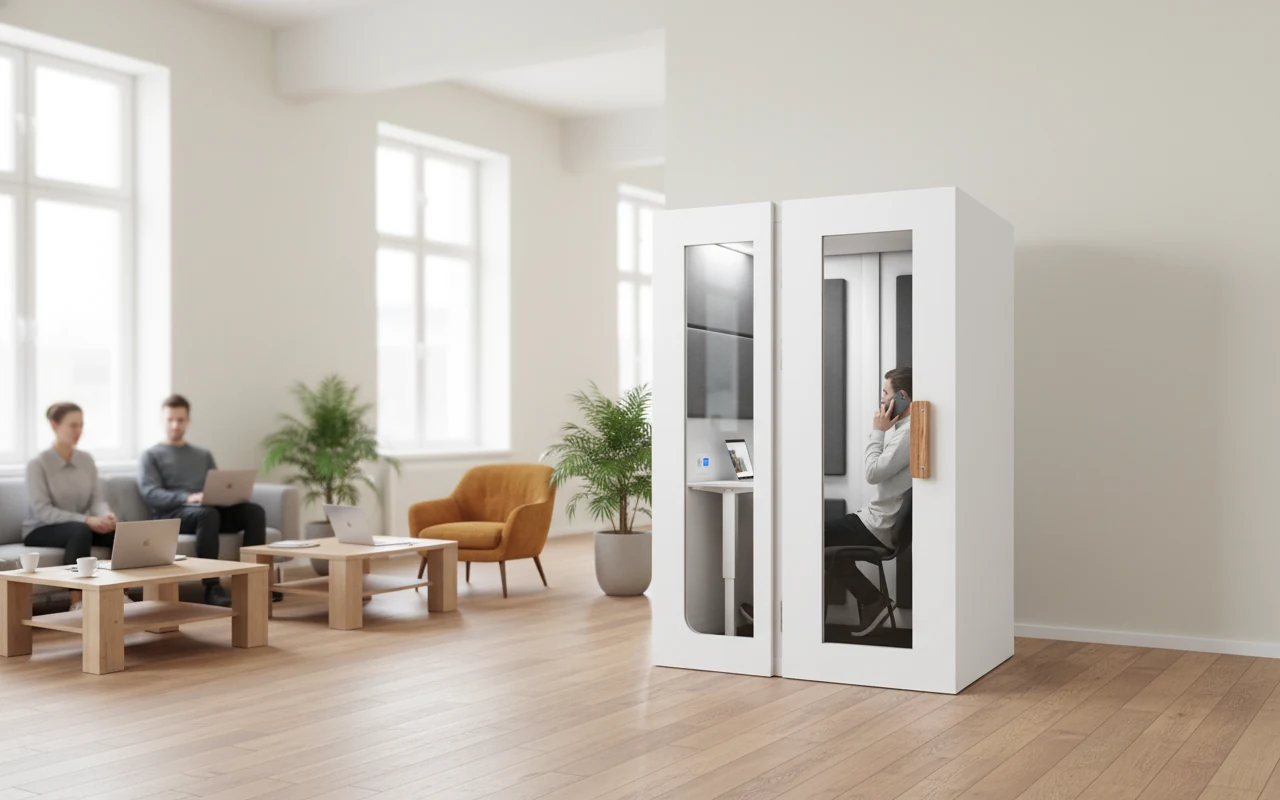
Silo 03 · Use case
Phone booths for office
Single-person calls, placement logic, headset realities.
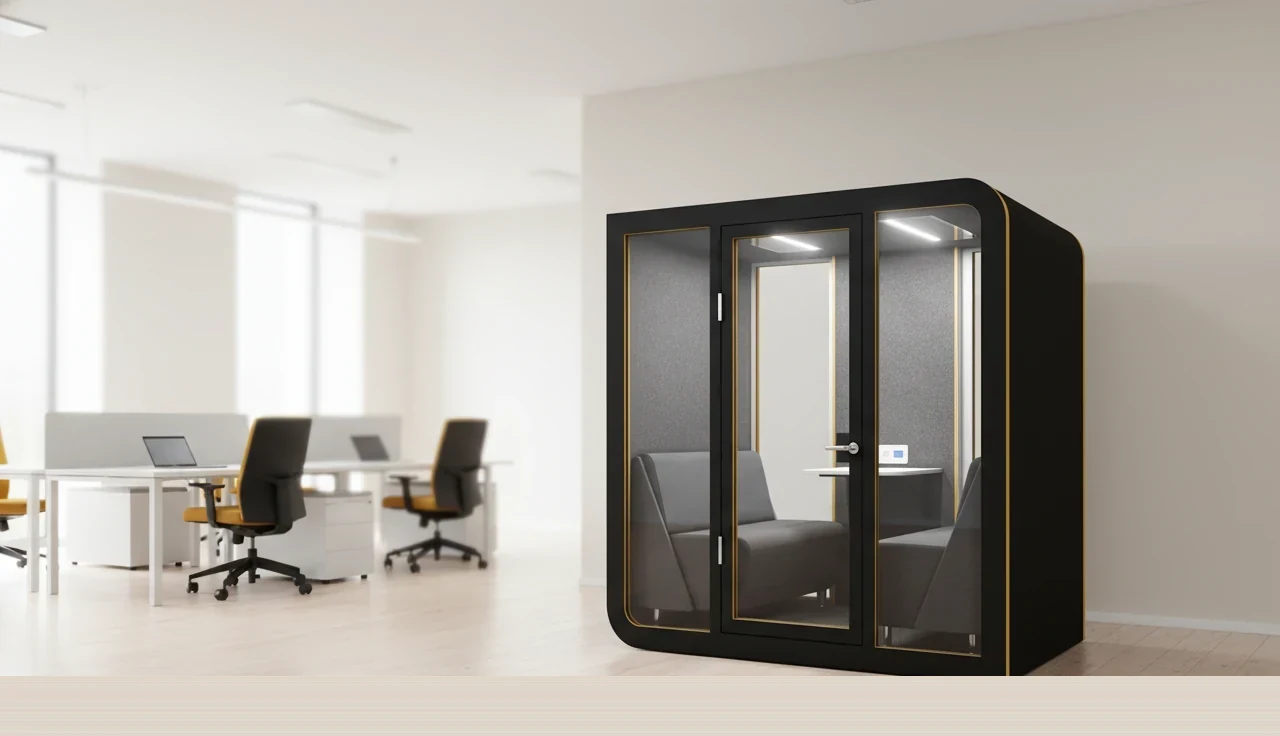
Silo 04 · History
From cubicles to booths
The cubicle era, what we kept, what comes next.
Editorial · Open-plan
Open-plan noise: why a quiet floor became a busy one
How call traffic on knowledge-work floors quietly tripled, and why headsets stopped being enough.
Editorial principles
- ✓Independent — no paid placements
- ✓Spec-honest — read the fine print
- ✓Buyer-side voice — not vendor PR
- ✓Commercial slant flagged in copy
Quick FAQ ↓
- How many booths per floor? →
- Do they need their own HVAC? →
- Phone booth vs acoustic pod? →
Context
The acoustic debt of the modern open floor
Walk into a typical tech-park office on a Tuesday morning. Half the engineers are on a stand-up. A delivery manager is on a client call. Two analysts are explaining a dashboard to a colleague in another city. Recruitment is screening a candidate. The HR business partner is mid-sync with payroll. All of it happens inside the same 4,000 square feet, separated by nothing more than a chair-back.
That isn't a noisy office. That is a normal one. Services economies moved harder into hybrid work than almost anywhere else, and the floors built for headcount a few years ago are being asked to hold three times the audio traffic today. Headsets help, but they don't fix the leakage. A confidential payroll discussion at desk 47 still reaches desk 49.
The honest answer most facilities teams arrive at is that you cannot retrofit an open floor with drywall every time another team wants to talk. You have to add small, sealed rooms. Office booths, also called phone booths, acoustic cabins or pods, are the practical version of that idea. A single-person cabin swallows the call. A two-person pod swallows the standup. The floor goes back to being a floor.
That is the entire premise of this resource. Most of what's online about acoustic pods is written by vendors selling one product line. We try to do the editorial work that a procurement manager actually needs: what the categories mean, what the specs translate to in a real office, and where the trade-offs land.
FAQ
Frequently asked questions
How many booths does a typical office floor need?
The working ratio facilities teams land on is roughly one single-person booth for every 12 to 15 seats, plus one two-person pod for every 40 seats. That assumes a call-heavy environment. A research-only floor needs fewer; a customer-success or recruiting floor often needs more.
Do booths need their own air handling, or do they share the office HVAC?
A proper booth has its own ventilation loop, usually a quiet inline fan, because once you seal a small room for acoustics you also seal it for air. After about ten minutes of a stuffy booth, people stop using it. Vendors who skip this detail are not selling you a complete product.
Are acoustic booths considered furniture or fit-out?
Most facilities teams classify them as freestanding furniture, which means they don't need a fresh fit-out approval from the landlord in a typical Grade A lease. They plug into a standard mains socket. This is one of their biggest practical advantages over a built room.
What's the difference between a phone booth and an acoustic pod?
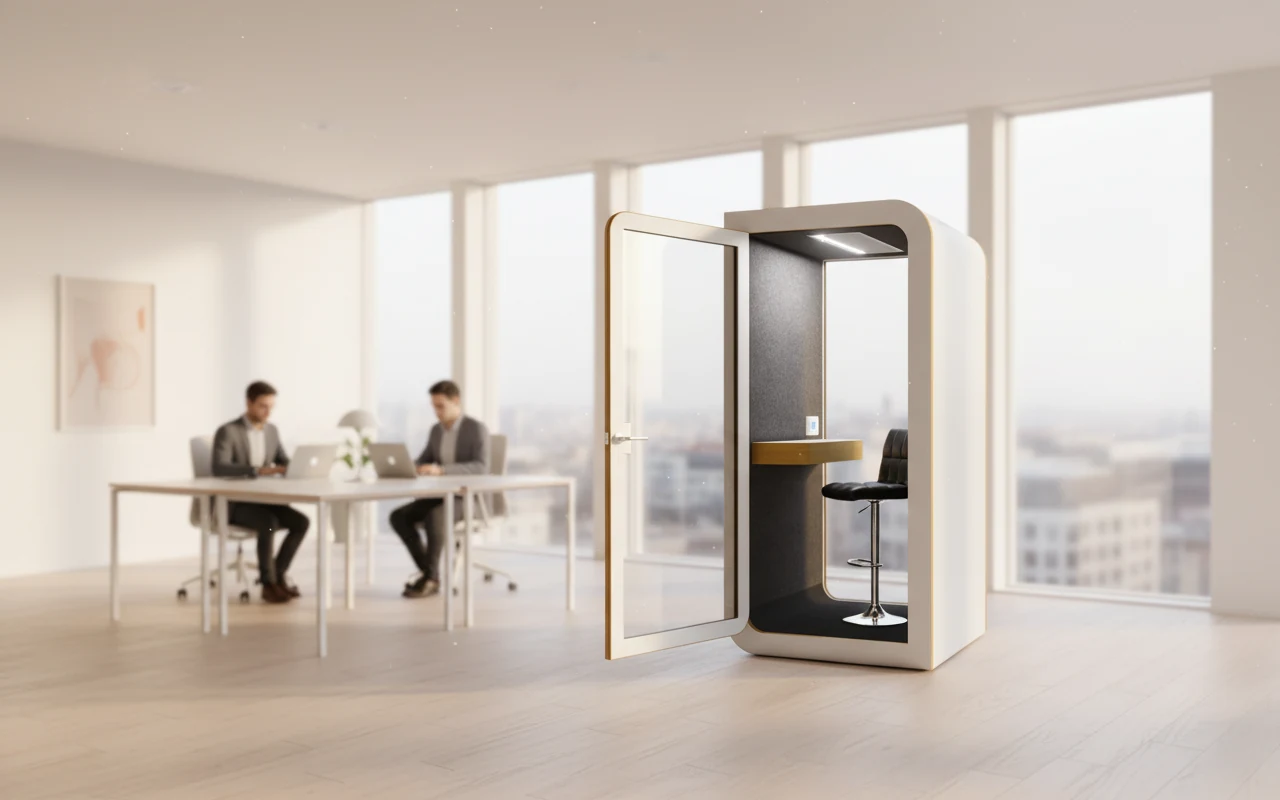
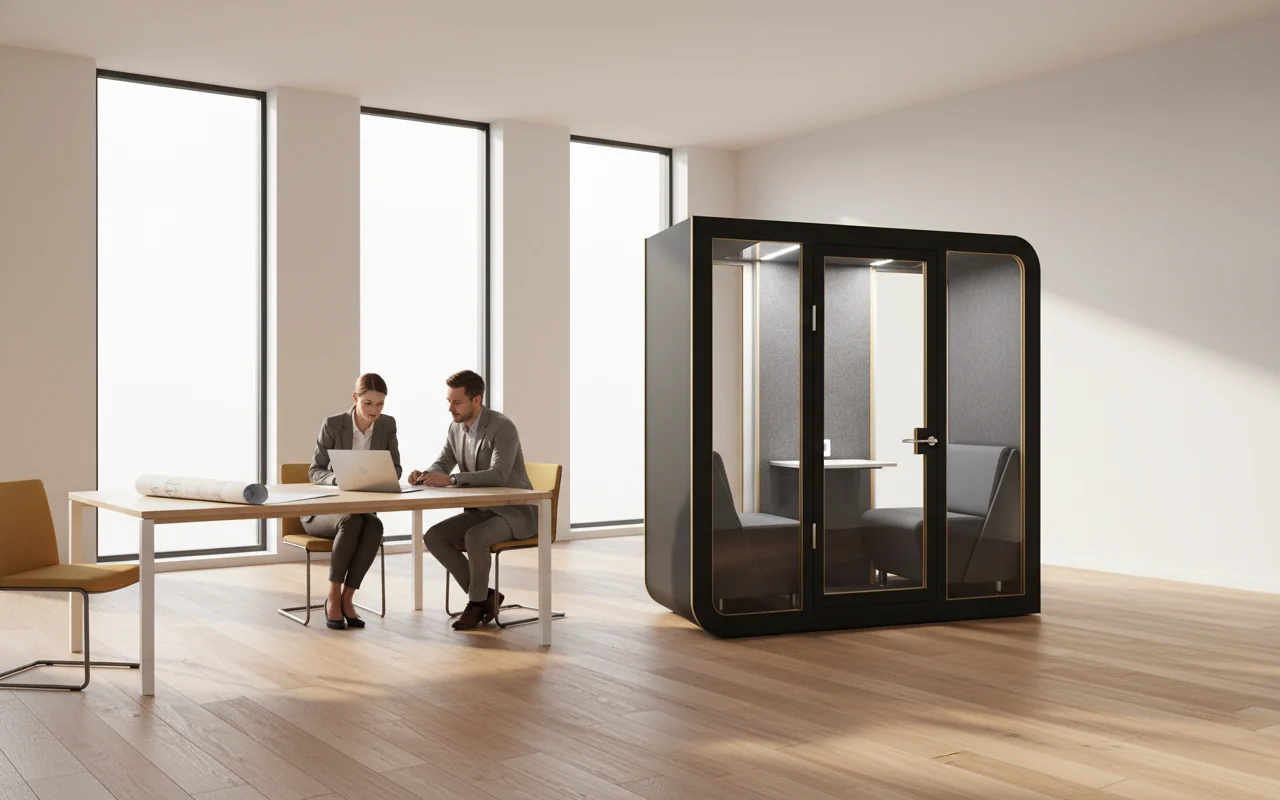
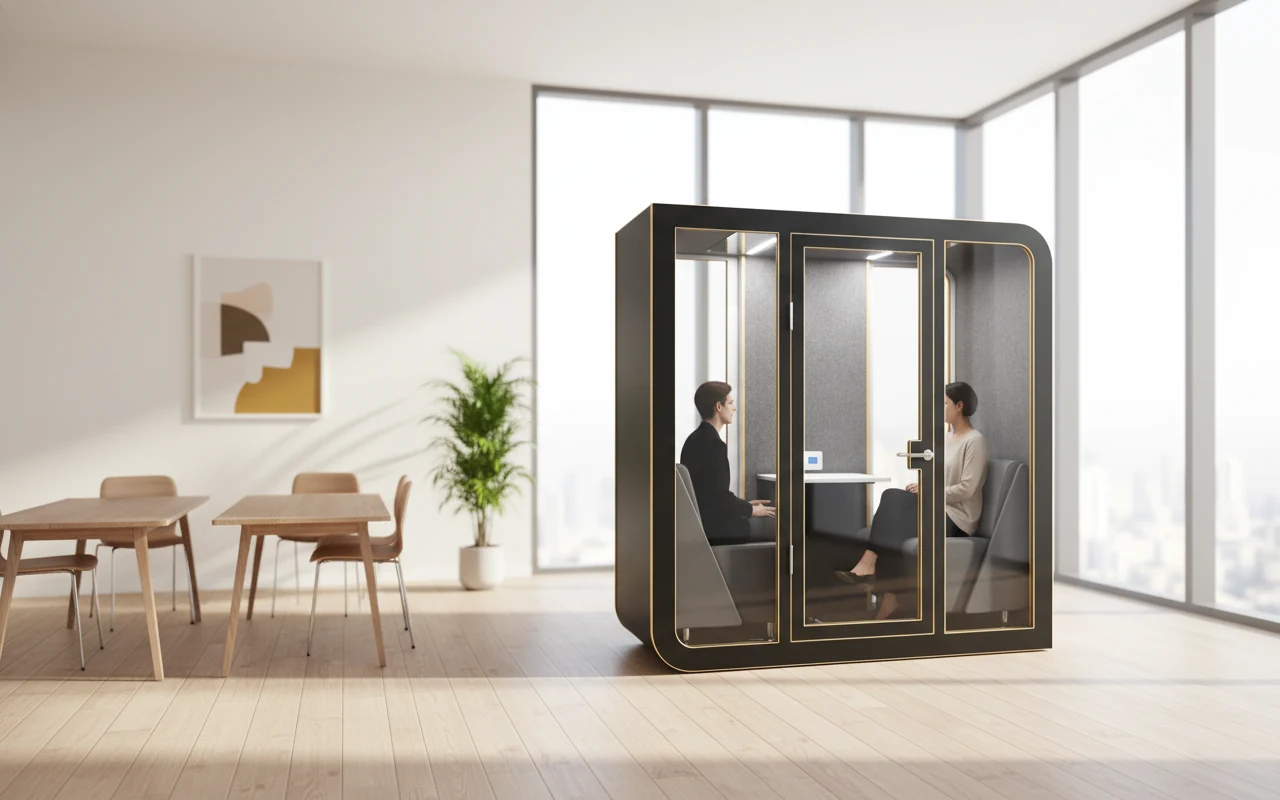
A phone booth is the smallest format, sized for one person standing or perched on a stool, designed for short calls. An acoustic pod is larger, seats two to four, and is designed for short meetings. Most offices need a mix, not one or the other.
How long do booths usually last in an active office?
A well-built booth, looked after by facilities and cleaned weekly, lasts the life of the lease. The wear points are the door seal and the ventilation filter, both of which are inexpensive consumables. The acoustic panels themselves do not degrade meaningfully with normal use.
How is a booth's sound isolation actually measured?
The meaningful figure is speech level reduction under ISO 23351-1, which measures how much a person's voice generated inside the booth is attenuated as heard outside. Premium ranges reach up to roughly 35 dB under that standard, with lighter ranges somewhat lower. Ask the vendor for a lab-measured value under that specific standard rather than a single headline number, and check where the door seals, since the door and its gasket are usually the weak point, not the panels.
Next step
Start with the category overview
If you've never specified a cabin before, the category overview is the right entry point.
Browse the category